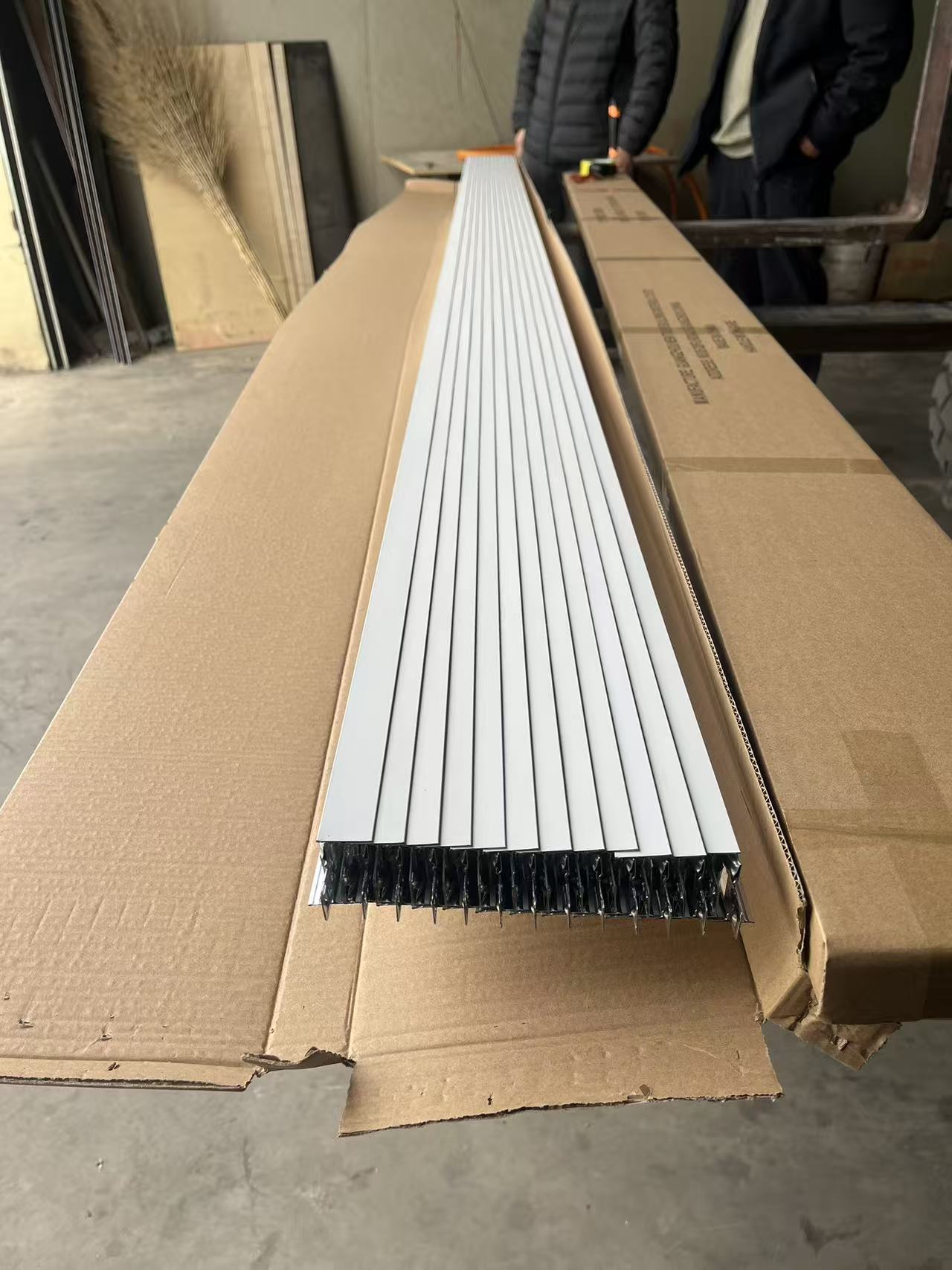
Drywall partitions are fast to install because the system is coordinated: metal studs and tracks form the frame, boards create the faces, insulation can improve acoustic or thermal performance, and joint treatment creates the finished surface.
Build the schedule as a system
| Component | Typical questions |
|---|---|
| Plasterboard | Type, thickness, width, length and edge? |
| Stud and track | Profile width, gauge, corrosion protection and length? |
| Insulation | Required acoustic or thermal performance? |
| Fixings | Board layer, screw type and spacing? |
| Joint treatment | Tape, compound and final finish? |
Reduce waste at the design stage
Choose sheet lengths that suit the wall height and the container packing plan. A cutting schedule can reduce offcuts, but only when the board orientation, openings and service zones are known.
Site handling matters
Store boards flat in a dry, ventilated area. Protect corners and avoid carrying oversized sheets through routes that were not checked during planning.
The lowest purchase price is not always the lowest installed cost. Include waste, handling, jointing and accessory compatibility in the comparison.