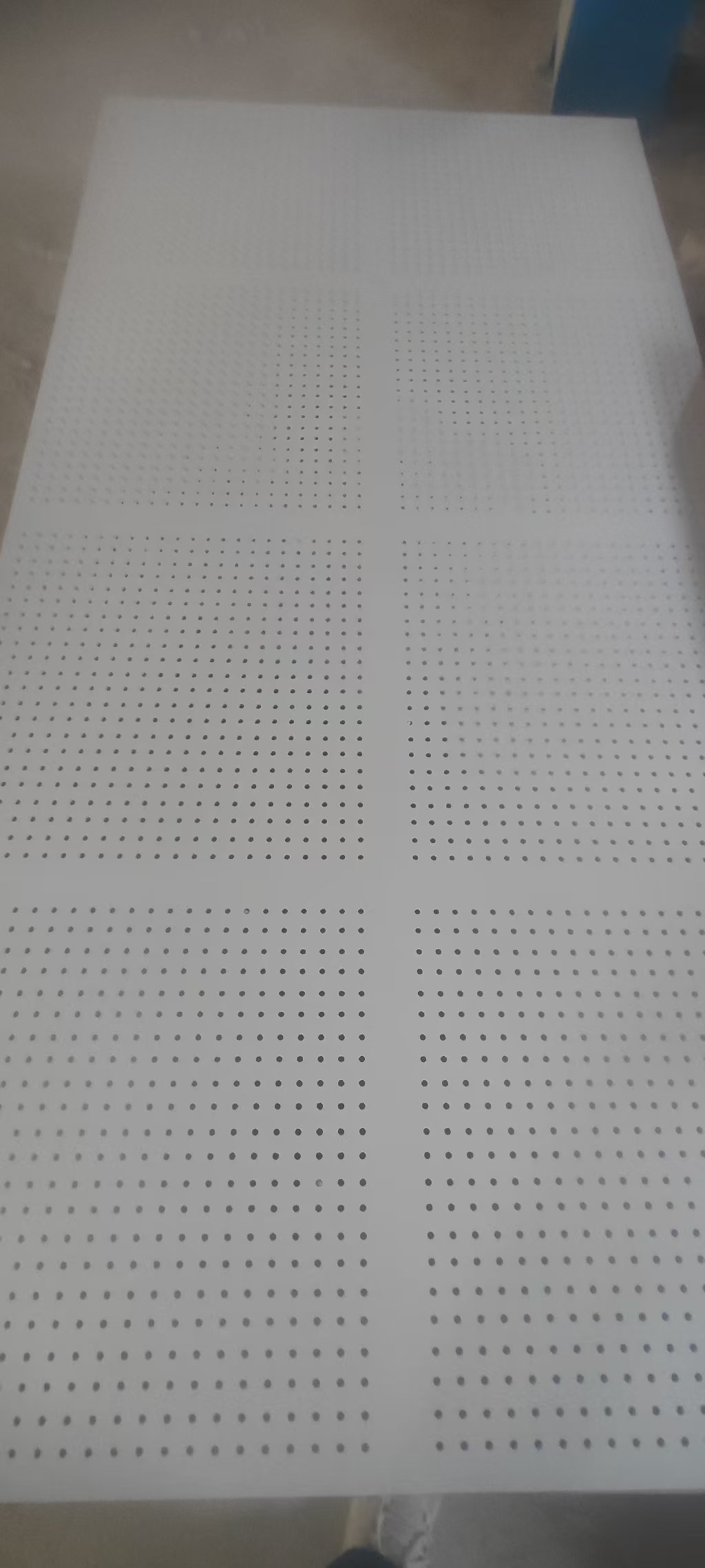
Perforated gypsum panels can help manage reflected sound when combined with an acoustic fleece or backing layer and a suitable ceiling cavity. Pattern, open area and panel layout all influence the finished result.
Key specification fields
| Field | Why it matters |
|---|---|
| Panel size | Controls grid layout, joint rhythm and replacement. |
| Perforation pattern | Changes appearance and acoustic behavior. |
| Backing layer | Supports absorption behind the visible panel. |
| Edge detail | Affects joint alignment and installation method. |
Use acoustic performance data carefully
Do not compare an uninstalled panel with a complete ceiling assembly. Check the test method, mounting condition and project target. The same panel can deliver different results with different backing, cavity depth and perimeter details.
Design and maintenance
Plan lighting, sprinklers and inspection access around the perforation pattern. Keep spare panels from the same batch where consistent pattern alignment matters.
A clear reflected ceiling plan is the best starting point for a perforated acoustic ceiling quotation.