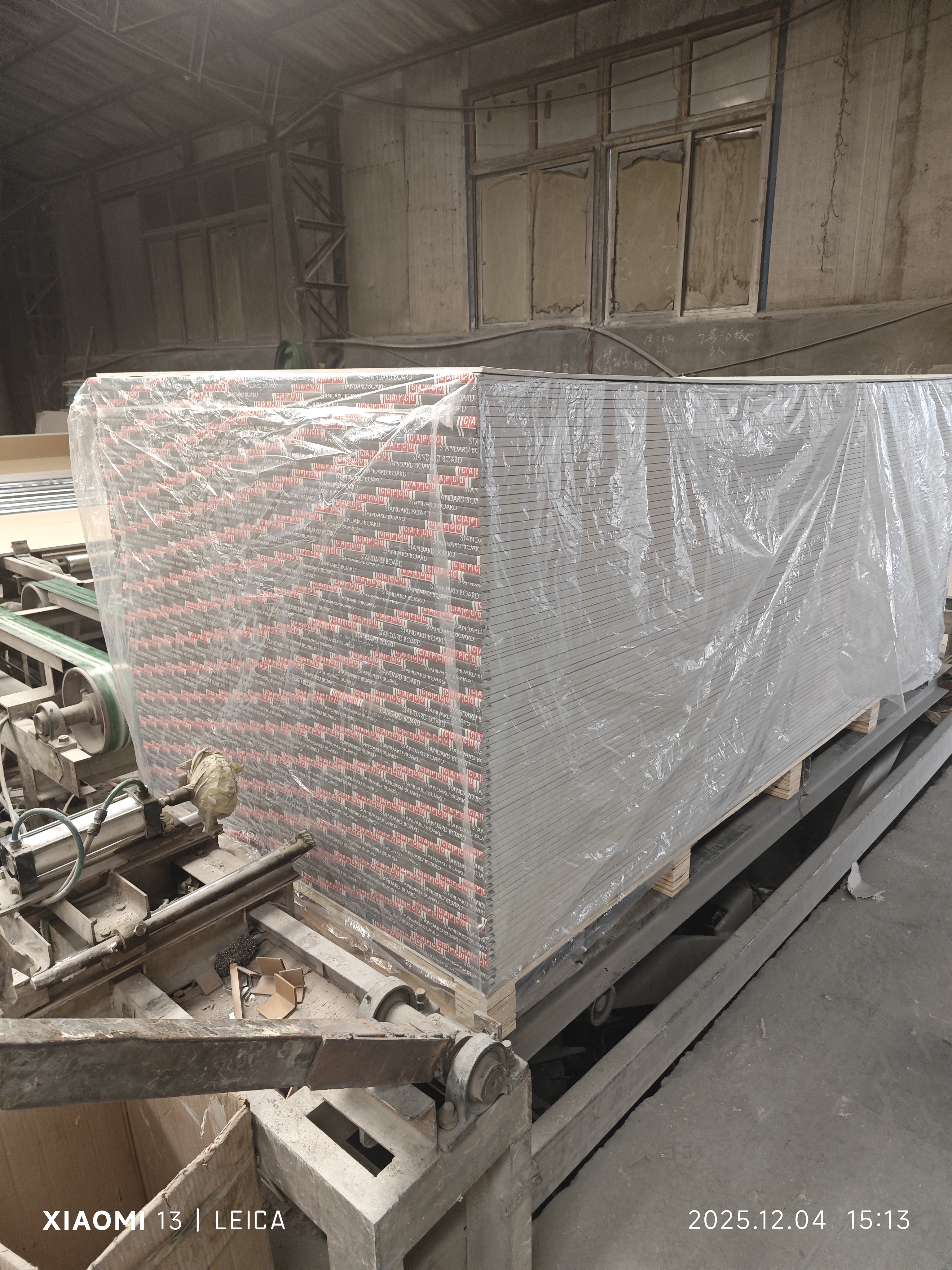
A plasterboard line such as 1200 × 3000 × 12.5 mm contains three basic dimensions, but a complete specification also includes board type, paper finish, edge profile, density, packaging and intended assembly.
Start with the five core fields
| Field | What it controls |
|---|---|
| Thickness | Rigidity, weight, handling and the assembly design. |
| Width | Joint layout, stud spacing and cutting efficiency. |
| Length | Horizontal coverage, lift planning and waste. |
| Edge | Joint treatment and finished surface quality. |
| Board type | Standard, moisture-resistant, fire-rated or acoustic use. |
Confirm the application before ordering
Ask whether the board is for a wall, ceiling, shaft, wet area or acoustic surface. The same nominal size can behave differently when installed in a tested assembly. Confirm the framing, screw pattern, joint compound and insulation as well.
Factory checklist: Request a datasheet, packing list, sample edge profile and loading plan before approving a bulk order.
Specification example
A 1200 × 3600 × 7 mm regular board is a large-format, lightweight option. It should be evaluated against handling capability, support spacing and the final finish requirement rather than selected by size alone.